
Video Preview
🎧 Part I Podcast free on Spotify.

🎧 Part II Podcast episode for paid subscribers only. Also available on Spotify.
To listen to paid episodes in Apple or Spotify, link your Substack subscription via the show settings on those platforms (instructions inside the Substack app under Subscriptions → Podcast).
Table of Contents
The tweet that gets reinvented every eighteen months
What a hip actually is and what it actually costs to build
The markup map from forge to hospital invoice
The chargemaster layer and why the sticker price is fiction
What everybody else pays and why the comparison is slipperier than it looks
Group purchasing already tried to be Costco and mostly failed at this one category
Why Costco logic breaks the second you walk into an operating room
Reference pricing is the one thing that has actually worked
Bundles, site of service, and the squeeze already happening quietly
What would have to be true for any of this to change
The scorecard, or what to actually watch
Abstract
A viral thread asking why hip implants cost so much more in the US than the UK or Canada is directionally right and numerically off. Implant constructs for Medicare hips and knees run roughly $4B to $5B a year, not $24B. The $24B figure is closer to total episode spend.
Fully loaded cost of goods on a standard primary total hip construct lands somewhere around $300 to $600. List price runs $10,000 to $16,000. Hospital invoice after negotiation typically lands $3,500 to $7,000, with small hospitals at the high end.
The gap is not titanium. It is field sales, consignment inventory, loaner tray logistics, rep coverage, and royalties. Ortho manufacturers spend roughly 35% to 40% of revenue on SG&A and 5% to 7% on R&D. Pharma spends 20%+ on R&D. That inversion is the whole story.
NHS registry analysis puts the average implant cost per primary total hip at about £1,260, roughly a fifth of the total procedure cost. The US construct is closer to 3x that, not the 10x the internet assumes.
Group purchasing organizations already cover the overwhelming majority of US hospitals and steer hundreds of billions in spend. Physician preference items are the category where GPO contract compliance is weakest, for structural reasons that have nothing to do with scale.
Costco pricing works because the shopper, the payer, and the consumer are the same person and the SKU is fungible. In an OR the decider bears no cost, the payer cannot refuse, and the consumer is unconscious.
Reference pricing has actually worked. CalPERS set a $30,000 reference price for joint replacement in 2011, volume shifted, and non designated hospitals cut prices. Australia is running the closest thing to a controlled experiment on device reference pricing right now.
The real leverage is site of service. At an ASC rate near $10,500, a $5,000 implant is roughly half the payment, which finally produces a buyer who cannot pretend the cost is somebody else’s problem.
The tweet that gets reinvented every eighteen months
Every year or so somebody with a large following notices that a chunk of forged metal roughly the size of a banana costs more than a used Honda, asks a completely reasonable public question about it, and gets 700,000 engagements. This time the question was about hip implants, US versus UK versus Canada, with the correct observation attached that smaller hospitals pay more, and a guess that Medicare spends about $24 billion on the hardware. The follow up was blunter: doctors are not Costco, procurement should work like Costco, mark up a set amount, charge less, done.
The question is good. The instinct is half right. The number is off by roughly a factor of five, and the proposed fix has been tried in several forms since the late 1980s.
Start with the arithmetic, because the audience here will not let it slide. Traditional Medicare plus Medicare Advantage runs somewhere in the neighborhood of 800,000 to a million hip and knee replacements annually, now split messily across inpatient, hospital outpatient, and ambulatory surgery centers after knees came off the inpatient only list in 2018 and hips followed a couple years later. Implant constructs for a primary case cluster between $4,000 and $6,000 for the big four brands, cheaper for commodity and private label, considerably more for revision. Multiply it out and you land at $4B to $5B in implant spend. Add spinal fusion hardware, where Medicare volume runs in the low hundreds of thousands and a multilevel construct runs $8,000 to $15,000 once you count screws, rods, cages, and biologics, and you pick up another $2B to $3B. Cardiac rhythm devices add a few billion more. The full Medicare implant bill is real money, but $24B is closer to what Medicare spends on the entire joint replacement episode including the hospitalization and the ninety day post acute tail, which is where the money actually hemorrhages.
None of which makes the underlying complaint wrong. It just means the fix has to target the right layer, and most of the popular fixes target the wrong one.
What a hip actually is and what it actually costs to build
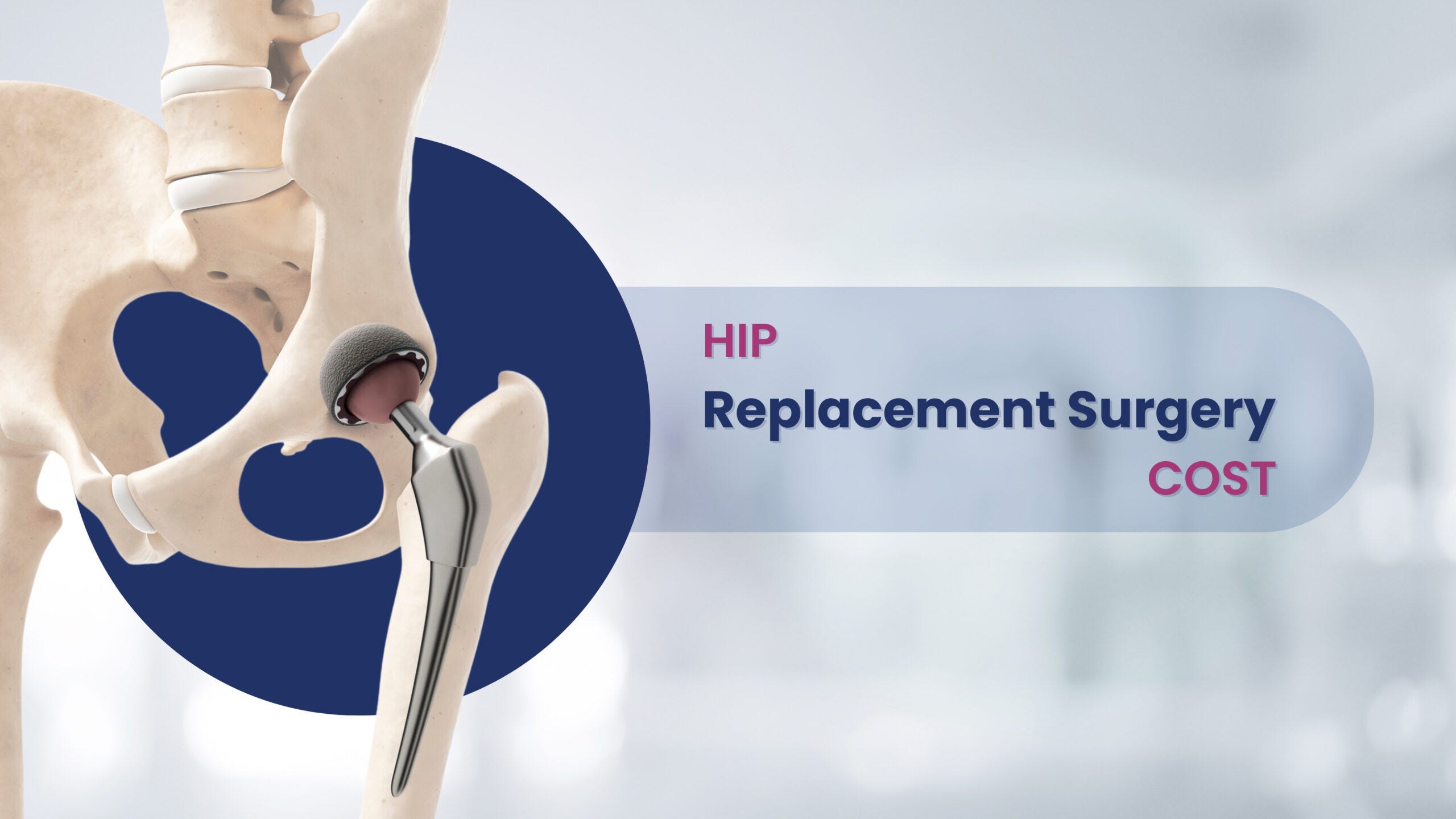
A primary total hip is four parts. A femoral stem, usually forged titanium alloy or cobalt chrome, machined to tolerances measured in microns and often finished with a porous coating or a plasma sprayed surface so bone grows into it. A femoral head, cobalt chrome or a ceramic composite. An acetabular shell, titanium, porous or increasingly 3D printed with a trabecular structure. And a liner, almost always highly crosslinked polyethylene, frequently vitamin E stabilized to slow oxidation.
The raw materials are not the story. A hip’s worth of medical grade titanium bar stock runs maybe $50 to $150 depending on the day and the alloy. The real manufacturing costs are the forging dies, the multi axis machining, the passivation and coating steps, the gamma crosslinking on the poly, the double sterile barrier packaging, the terminal sterilization, and the lot level traceability that a Class III implant requires under quality system regulation and unique device identification. Add validated cleanroom capacity and the qualification burden that makes changing a supplier a paperwork event rather than a purchasing decision.
Put it together and a fully loaded cost of goods on a standard construct lands somewhere around $300 to $600. A premium ceramic on highly crosslinked poly build with a fancy 3D printed shell might get you to $800 or $1,200. Nobody outside the manufacturers has exact numbers, and the manufacturers have excellent reasons not to publish them, but the reported gross margins triangulate the range. The large orthopedic players run gross margins in the 65% to 72% band and have for two decades, through recessions, through bundled payments, through the metal on metal recall era.
Here is the part that actually explains the price, and it is visible in any of these companies’ income statements. Selling, general and administrative expense runs roughly 35% to 40% of revenue. Research and development runs 5% to 7%. Flip over to a large pharma income statement and the ratio inverts, with R&D north of 20%. Orthopedic implants are not priced like a discovery business. They are priced like a distribution business that happens to sell a regulated part. The margin is not funding the next breakthrough bearing surface. It is funding the field.
The markup map from forge to hospital invoice
The manufacturer publishes a list price for a construct that will make your eyes water. Ten to sixteen thousand dollars for a primary total hip is a normal list. Nobody pays list, in the same way nobody pays chargemaster, and for the same reason: list exists to anchor the negotiation and to serve as the denominator in a discount percentage that makes everybody feel good.
The hospital invoice is where it gets real, and it varies wildly. A large integrated delivery network with a functioning value analysis committee and a surgeon population that has been convinced to standardize might land a primary hip construct at $3,000 to $4,000. A mid sized community hospital lands $5,000 to $6,000. A small rural hospital doing eighty joints a year with three surgeons who each want a different brand lands $7,000 or worse, and cannot do anything about it, because it has no volume to trade and no credible threat to leave. The observation that smaller hospitals pay more is not a suspicion. It is the single most consistent finding in the implant pricing literature, and price variation of two to three times for the identical part number from the identical manufacturer in the same metro is routine.
Between the factory and the invoice sits the layer that the raw material math misses. In many markets the manufacturer sells through independent distributors who take 20% to 30% of the invoice. In direct markets the rep model runs cheaper, maybe 10% to 15% all in, but the rep is still there. And the rep is not a salesperson in the ordinary sense. The rep manages consignment inventory, which means the manufacturer has parked several hundred thousand to a couple million dollars of implants and instruments in that hospital’s storeroom, unpaid for, in every size the surgeon might need. The rep delivers and retrieves loaner trays, and a hip case might pull four to ten trays that each need reprocessing through sterile processing at fifty to a hundred dollars a cycle, a cost the hospital eats on its own overhead line rather than on the implant line. The rep shows up at 6:15 in the morning and reads part numbers off the tray while the surgeon is elbow deep in an acetabulum.
That is a real service. Somebody has to do it. The complaint is not that it is worthless, it is that it gets invoiced as titanium. The hospital thinks it is buying a piece of metal and is actually buying a metal piece plus a logistics network plus a clinical support contractor plus, in a meaningful minority of cases, a royalty stream flowing back to a surgeon who helped design the thing. Open Payments makes those royalties visible now, which is an improvement over the pre 2013 era, and the 2007 deferred prosecution agreements that cost the big four hundreds of millions over consulting payments to surgeons are the reason anybody bothered to build that transparency at all. The physician owned distributorship version of the same structure drew an OIG special fraud alert in 2013 after Senate investigators found that facilities using them had notably higher surgical volumes, which is either a remarkable coincidence or exactly what it looks like.
The chargemaster layer and why the sticker price is fiction
Then the hospital marks it up, typically two to five times invoice, and puts it on a bill.
For Medicare inpatient, that markup is theater. Payment for a primary joint under the major joint DRG without major complications is fixed at roughly $13,500 nationally, adjusted for wage index and everything else, and it does not care what the chargemaster says. The hospital bought a $5,000 implant against a $13,500 payment and now has to cover the OR, the anesthesia, the two day stay, the implant, and the overhead. That is a genuinely tight case, which is why hospitals grumble that joints are barely profitable in Medicare and why the whole category migrated outpatient the moment CMS let it.
Where the markup still bites is commercial. Some contracts still pay a percentage of charges. More commonly there is an implant carve out, a negotiated cost plus arrangement where the hospital gets paid invoice plus twenty to forty percent for high cost devices above a threshold. Read that structure again, because it is the quiet scandal: in a cost plus carve out, the hospital’s margin goes up when the implant costs more. That contract term takes the one party with a natural incentive to negotiate hard and pays it to stop. And commercial rates in general sit at roughly two and a half times Medicare on a claims weighted basis according to the recurring employer sponsored studies, which puts the same construct inside a case rate that looks nothing like the government’s.
The transparency rules do not fix this, which is worth being precise about since it is where most of the policy energy has gone. Hospital machine readable files have been required since January 2021 and payer files since mid 2022. They will tell you what a given hospital gets paid by a given plan for a total hip. They will not tell you, in any file, anywhere, what that hospital paid the manufacturer for the implant, because the implant is inside a DRG or a case rate and is not a separately identified line. The device level price is the one price in the entire supply chain that nobody publishes and no rule requires. Every actor in the chain knows their own number and nobody knows anybody else’s, which is a beautiful equilibrium if you are the one selling.
What everybody else pays and why the comparison is slipperier than it looks
The international comparison is real, and smaller than the discourse assumes.
The best public number for England and Wales comes out of national joint registry data paired with NHS reference costs. Across a decade of primary total hip replacements, average implant cost landed at about £1,260 per surgery, which worked out to roughly a fifth of the total cost of the procedure. The NHS spent something like £4.76 billion doing 702,381 primary hips over that window. The same analysis found that shifting toward cemented implant combinations for appropriate patients could save on the order of £281 million over a decade without meaningfully raising ten year revision risk, which is a nice illustration of what happens when you have registry data granular enough to argue about.
Set £1,260 next to a US construct at $4,000 to $6,000 and you get a gap of roughly three times, not ten. Still enormous. Just not cartoonish. And in cardiac devices the published comparisons run wider, with US prices for some implantable cardiac devices running up to six times what certain European systems pay.
The caveats matter if you want to argue this in a room with people who know the space. The NHS number does not always carry the same bundle. Cement, cement restrictors, instrument amortization, and rep coverage sit in different buckets in different systems. Currency and VAT treatment move things around. And the biggest structural difference is not procurement sophistication, it is standardization. NHS trusts concentrate volume, and their surgeons operate inside a registry culture where implant choice is a defensible clinical decision subject to published survivorship data rather than a personal preference nobody may question. The price follows the standardization. It does not cause it.
Australia is the more interesting case because it is running something close to a natural experiment. The Prostheses List, now the Prescribed List, was created in 1985 to set the minimum benefit private insurers must pay for implanted devices. It worked as intended for about a decade and then calcified into a price floor while global device prices drifted down around it, leaving Australian private patients paying materially more than the same devices cost the Australian public system. The 2021 reform program funded a multi year effort to reduce listed benefits toward a benchmark price derived from what public hospitals actually pay, with a floor so that anything already within seven percent of the public benchmark was left alone, and staged reductions across categories with cardiac devices getting the longest runway and a final reduction landing in mid 2025. The reform is being formally evaluated, which is more than can be said for most device pricing policy anywhere. When that evaluation lands it will be the closest thing the world has to an answer on whether administrative reference pricing on devices produces savings without wrecking access or clinician choice.
Group purchasing already tried to be Costco and mostly failed at this one category
The Costco proposal has an awkward problem, which is that it exists. It has existed since Congress created a safe harbor in 1987 permitting group purchasing organizations to be paid administrative fees by the vendors they contract with, generally capped around three percent and requiring disclosure to members. The result is the modern GPO industry, which covers the overwhelming majority of US hospitals, aggregates hundreds of billions in purchasing volume, and functions exactly like the bulk buying club the tweet is asking for.
For commodities it works fine. Gloves, gauze, sutures, IV sets, basic capital, the boring stuff. National contract, tiered pricing, high compliance, prices that look like a competitive market because the products are genuinely fungible and nobody in scrubs has an emotional relationship with a particular brand of exam glove.
Physician preference items are where GPO contracting has the weakest grip, and it is not close. Roughly forty to sixty percent of a hospital’s total supply spend runs through PPI categories, and those are the categories with the lowest contract compliance. A GPO can negotiate a beautiful tier on a hip system, and the hospital buys off contract anyway, because the surgeon trained on a different stem, or the surgeon has done four thousand cases with a particular broach and would like to keep his revision rate where it is, or the surgeon is on a royalty agreement with a competitor. The GPO’s contract is between the GPO and the manufacturer. The person who selects the product is not a party to it and has no financial exposure to it.
There is also the fee structure objection, which is that a GPO earning a percentage of spend is earning more when spend is higher. The empirical literature on whether that actually raises prices is genuinely mixed and has been argued in good faith for twenty years. But it is a fair thing to raise, and it is a real reason to be skeptical that adding another aggregator on top of the existing aggregators solves anything.
Why Costco logic breaks the second you walk into an operating room
Costco works because of four conditions that all hold simultaneously and none of which hold in surgery.
The shopper is the payer. The payer is the consumer. The product is fungible, so if Kirkland olive oil gets weird, you buy the other one. And Costco can credibly walk away from a supplier, because the supplier needs the shelf more than the shelf needs the supplier.
In an operating room the person choosing the implant is a surgeon who bears none of the cost and faces real, non financial switching costs: different instrument trays, different broaches and reamers, different jigs, different revision pathway, different feel, and a personal revision rate that is a professional reputation and sometimes a malpractice exposure. The person paying is a hospital already at fixed risk under a DRG, which sounds like it should produce hard bargaining and mostly does not. The consumer is unconscious. And the supplier knows perfectly well that no hospital walks away mid case, or mid surgeon relationship.
The robotics layer has made this worse in a way that does not get enough attention. Every major platform ties its plan to its own implants. A hospital that took a seven figure robot at a favorable price, or on a usage based agreement, has effectively signed a multi year implant commitment whether or not the contract says so in those words. That is razor and blades and it is being installed into the market faster than any price transparency rule is being enforced. When a hospital’s cost per case goes up because the robot only runs one company’s constructs, no machine readable file will ever show you that.
Then there is the arithmetic that ends every one of these negotiations. A busy adult reconstruction surgeon doing three hundred fifty primary joints a year, at roughly $13,500 of Medicare payment per inpatient case and considerably more on the commercial side, represents something in the neighborhood of five million dollars of annual facility revenue. Squeezing $1,500 per case out of the implant is worth about half a million. Losing the surgeon to the hospital across town is worth negative five million. Every supply chain leader in America can do that math in their head, which is why the negotiation ends the way it ends. This is not an information problem. Everyone involved has the information. It is a bargaining problem, and bargaining problems do not get solved by publishing more numbers.
Reference pricing is the one thing that has actually worked
Here is the thing that did work, and it is instructive precisely because it did not touch the implant price at all.
In 2011 CalPERS set a reference price of $30,000 for hip and knee replacement and designated a set of facilities that would perform the procedure at or below that number. Go somewhere else and the member pays the difference. The published evaluations found what you would hope: volume moved to designated facilities, and, more importantly, non designated facilities cut their prices to get back on the list. The savings were modest in absolute dollars in the early years and compounded, and the mechanism was clean. Nobody regulated a device price. Nobody built a national implant formulary. A large purchaser created a credible outside option and made the patient feel the delta, and the hospitals that wanted the volume went and squeezed their own supply chain to get their case cost under the number.
That is the actual answer to the Costco question. You do not need to run the procurement. You need to put the entity that already runs the procurement in a position where it loses volume if its case cost is high.
The caveats are real and worth stating. Reference pricing needs a genuine supply of designated facilities, which means it works in dense markets and struggles in rural ones. It exposes patients to balance billing if they choose out, which is a political problem and sometimes an equity problem. And it only works on procedures that are shoppable, schedulable, and standardized enough that quality is roughly comparable across sites. Elective joint replacement is essentially the textbook case, which is why it keeps being the demonstration project and why the results do not transfer to a heart attack.
Bundles, site of service, and the squeeze already happening quietly
The bigger structural squeeze is already underway and mostly nobody is calling it device price reform.
Mandatory bundling started with the joint replacement model in 2016, randomized across metro areas, which produced one of the cleaner policy evaluations in Medicare’s history. The finding was modest savings driven almost entirely by post acute care substitution, not by implant prices. Hospitals sent fewer patients to skilled nursing facilities and more home with home health. They did not meaningfully renegotiate their implants, because at a $13,500 payment with the post acute tail as the fat target, the implant was not where the easy money was.
Site of service is different. When knees came off the inpatient only list and then landed on the ASC covered procedures list, the payment math changed completely. The ASC rate for a total knee sits near $10,500. Against that, a $5,000 implant is roughly half of the entire payment for the case. There is no post acute tail to squeeze, no overhead pool to hide it in, and no way to pretend the number belongs to someone else. So ASCs, many of them physician owned, negotiate implant prices with an intensity that hospitals never manage, and they buy commodity constructs and private label systems at $1,500 to $2,500 that perform fine, and they do it without any transparency rule, formulary, or federal intervention whatsoever. The decider and the payer finally became the same person, which was the only condition that ever mattered.
That is the Costco moment, and it did not come from bulk buying. It came from ownership.
There is a legitimate counterweight to all of this, and it deserves more than a footnote. Cheap is not automatically fine. The metal on metal era is the standing reminder: one recalled hip system, roughly ninety three thousand units, billions in settlements, and a lot of people who needed a second operation they should not have needed. Sweden has run a joint registry since 1979. The US did not get a national one until 2010, and it took another decade to accumulate enough volume to speak with authority. Price competition on implants is only safe when survivorship data at the construct level is public and current. Otherwise you are running a procurement strategy on a product where the failure shows up eight years later in somebody else’s operating room.
What would have to be true for any of this to change
Five things, and they are not evenly hard.
The easiest and least discussed is putting the device identifier on the claim. Unique device identification exists, the identifier is printed on the package, and the mechanism to carry it on an institutional claim has existed for years. It is not consistently required, and so CMS has no idea, in its own claims data, which specific implant went into which patient at which price. Requiring it would let CMS publish an implant level price file the way it publishes average sales price for Part B drugs, and would simultaneously make registry linkage and recall tracking dramatically better. The device industry has fought this for a decade for exactly the reason you would expect. Note that the Inflation Reduction Act negotiated drug prices and pointedly did not touch devices, and there is no device equivalent of ASP reporting anywhere in Medicare. That is the actual blind spot.
The second is putting the buyer at real risk, which mandatory bundling and the continued migration to outpatient and ASC settings are doing whether anybody likes it or not.
The third is giving the decider some skin in the game, which means gainsharing and co management structures that let a surgeon share in savings from standardization without tripping the anti kickback wire. The regulatory framework here has loosened somewhat and remains cautious enough that most systems do not bother.
The fourth is giving patients a reason to care, which means reference pricing and benefit designs with designated networks for schedulable procedures. This is the highest yield intervention per unit of political capital and it does not require a single new federal rule, only an employer or a public purchaser willing to do it.
The fifth is keeping registry quality public and implant specific, so that price competition selects for value rather than for whoever cut the most corners on the polyethylene.
The scorecard, or what to actually watch
For anybody trying to figure out whether this actually moves, the leading indicators are reasonably clear. Watch whether the expanded mandatory joint bundling program shifts implant spend or repeats the earlier result of squeezing only post acute. Watch the ASC share of total joints, because that share is the best single proxy for how much of the market has a buyer who genuinely cares about implant cost. Watch whether device identifier reporting on claims ever gets required, because that is the switch that turns device pricing from folklore into data. Watch the final Australian Prescribed List evaluation, because it is the only rigorous read anyone will get on administrative reference pricing for devices. Watch robot install base, because every placement is a multi year implant lock in that no price file will disclose. And watch commercial contract structures, because a cost plus implant carve out is a contractual commitment by a hospital to stop negotiating, and it is far more common than it should be.
The original complaint is right about the disease. A part that costs six hundred dollars to make should not arrive on a patient’s bill at fifteen thousand, and the fact that it does is a structural failure rather than a manufacturing achievement. But nobody is marking up a hip out of malice, and nobody is going to fix it by opening a warehouse club. The markup exists because the person who picks the implant does not pay for it, the person who pays for it cannot refuse it, and the person receiving it is asleep. Fix those three and the price falls without anyone having to legislate the price. Leave them alone and every transparency rule ever written will produce a beautiful public dataset describing, in great detail, a price that nobody involved has any power to change
.