🎧 Part I Podcast free on Apple Podcasts and Spotify.

🎧 Part II Podcast episode for paid subscribers only. Also available on Apple Podcasts and Spotify.
To listen to paid episodes in Apple or Spotify, link your Substack subscription via the show settings on those platforms (instructions inside the Substack app under Subscriptions → Podcast).
Abstract
1. What changed since August
2. The market need, restated
3. Why competing with Fortuna is the wrong business
4. What Fortuna has and what it is missing
5. The partnership, piece by piece
6. The rules engine as the shared asset
7. Who pays and how the money moves
8. Beachheads and the first hundred days
9. Where the partnership breaks
10. What has to be true by January
Abstract
The August essay argued that the Medicaid work requirement created a clinical chore nobody was staffed for. Two things happened since. CMS’s September 8 medical frailty guidance made the chore smaller and more specific, splitting it into three optional tiers where only the third one necessarily requires individualized manual review. And the lawsuit did not go away: the preliminary injunction was denied in July, and the court was set to hear summary-judgment arguments on October 20.
Fortuna Health owns the consumer navigation layer, with a16z money, 21 states, plan contracts covering 25 million-plus Medicaid lives, and a hospital channel through Cedar. Building a second navigator is a price war with free. Fortuna’s own writing on the guidance says it wants to help members know what documentation to submit and help plans fold state exclusion methodologies into care management. That is a description of a supplier it does not have.
The business to build is the clinical layer behind Fortuna and the hospital eligibility vendors: a state-by-state frailty rules engine, licensed clinicians producing Tier 3 documentation, and a reinstatement shop that works fair hearings. Fortuna’s navigators triage, the clinical layer certifies, Fortuna files. Direct sales go only to FQHCs and CCBHCs, where no navigator exists.
Who pays: providers on contingency, plans through Fortuna on per-packet pricing structured for the IFC’s conflict rules, states through their incumbents for Tier 3 review surge.
Beachheads: North Carolina and Utah first, because both barred first-year self-attestation and both sit in Fortuna’s footprint. Nebraska and Montana direct through health centers, because terminations there are already real. The 2028 reverification cycle is where the volume is.
Break points: a court vacating the impairment test, states building frictionless provider portals, Fortuna deciding to build it in-house, and the False Claims Act line that a sloppy operator will cross by March.
What changed since August
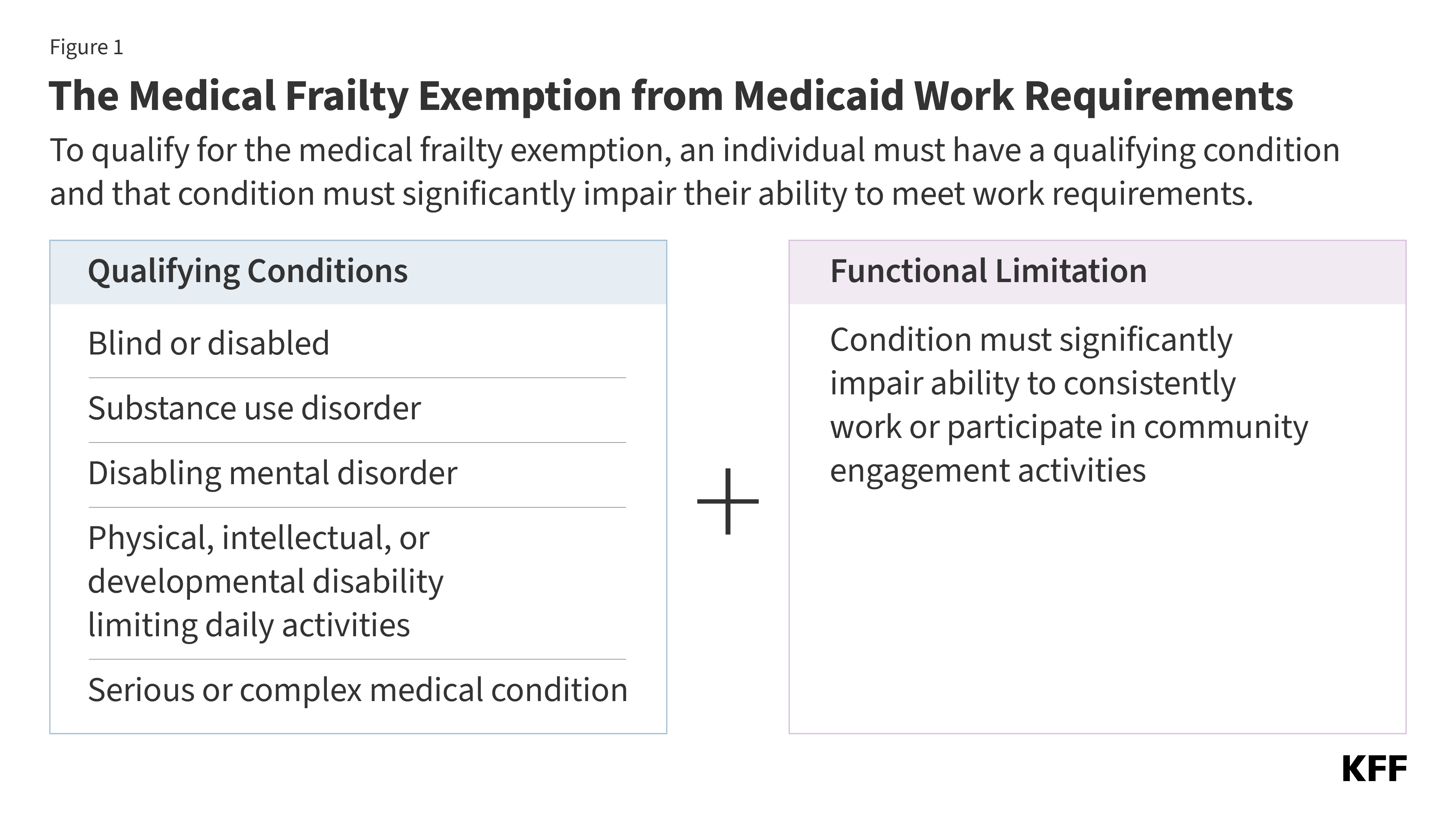
The August essay leaned on a June interim final rule and a hunch that the functional impairment test would turn a code lookup into a clinical workflow. The rule is still the rule. CMS-2454-IFC took effect July 31, comments closed the same day, and nothing has replaced it, which is how interim final rules work when an agency is not obligated to revise before go live. What did arrive was a slide deck. On September 8 CMS posted implementation guidance for the medically frail exclusion, and the deck matters more than most rules do because it tells states how to actually run the thing. The guidance is optional, and it sorts frailty into three tiers. Tier 1 is conditions where an ICD-10 code may independently establish both the condition and significant impairment; Tier 2 is a diagnosis plus supplemental information such as utilization, pharmacy, durable medical equipment, or other clinical data; Tier 3 is everyone the available data cannot sort, which triggers individualized review and may require additional documentation. CMS said the point of a data-first design is to limit reliance on manual verification by a clinician or caseworker. So the August thesis was half right. The code lookup came back for the sickest slice. The clinical workflow survived for the residue, although the size of that residue will depend on each state’s methodology.
The deck also settled the plumbing. States must maintain an auditable condition list and revise it as they learn. Frailty gets reverified at least every twelve months. Self-declaration under penalty of perjury is a state option when no reliable data exist, subject to the statutory transition rules. CMS also expects states to use available claims and other data to identify qualifying conditions. Meanwhile the litigation did exactly what litigation does. Twenty-five states and DC sued in Massachusetts v. Oz over the impairment test, the twelve-month lookback and the hardship exception. Judge Stearns denied the preliminary injunction on July 29, without prejudice, on the ground that the states had not shown irreparable harm. On October 20, the court declined to block the federal requirement, leaving the medically frail impairment standard in place as implementation proceeds. NHeLP and sixty-nine other organizations filed an amicus in September carrying Manatt’s estimate that the frailty restrictions alone cost about 1.8 million people coverage per year through 2034. And the early states turned out to be earlier than the August essay said. Nebraska went live May 1. Montana launched July 1 with disenrollments possible from October. Arkansas soft-launched July 1 with no disenrollments until January. Iowa starts December 1. North Carolina and Utah passed laws barring self-attestation in the first year. Writing that no state had put a 2026 date into effect was wrong in August and is more wrong now, which is the kind of thing worth saying in print before someone else does.
The market need, restated
Start with CMS’s own math, because it is the only math the counterparty cannot argue with. Roughly 18.5 million expansion adults are subject. CMS projects 26 percent land in an exclusion or exception, and projects a 15 percent disenrollment rate among the rest, nine points for failing the requirement and six for paperwork, which works out to about 2.3 million people in the first fiscal year. Manatt’s number, built for the plaintiff states, is that 1.8 million of the annual losses trace to the frailty restriction specifically. That 1.8 million is the pool: people with a qualifying diagnosis who cannot prove, or are never asked to prove, that the condition keeps them from eighty hours a month. Now run them through the tiers. Tier 1 gets caught ex parte if the person has claims in the lookback window and the state built the list. Tier 2 gets caught only if the state wrote the combination logic, and the deck told states to develop methodologies on historical claims, validate them with clinicians, and link the logic to eligibility systems. Most states will ship a Tier 1 code list on January 1 and a thin or empty Tier 2, which pushes a lot of Tier 2 people into Tier 3 manual review in the first half of 2027. That forecast remains an assumption, not an established fact. Over time the Tier 2 logic gets built, by the incumbents and by plans feeding encounter data, and the manual pool shrinks to its structural floor: people with no recent claims, people whose severity is invisible in codes, people in recovery under five years, and people in states that chose a narrow list on purpose, which Montana’s Medicaid director described as the goal.
What Tier 3 needs is not navigation. The IFC says states may accept documentation from physicians, nurse practitioners, physician assistants, psychologists, counselors, therapists, clinical social workers and other practitioners the state credentials, under state scope-of-practice law. That is a licensed signature on a functional standard, and it is the one input in this whole apparatus that a state cannot automate, a plan is barred from producing, and an AI phone agent cannot sign. Then there is the other half of the need, which has nothing to do with frailty definitions. Six points of CMS’s fifteen are procedural, about a million people a year who get terminated for a missed notice, and expansion adults now face redeterminations every six months, so the paperwork miss rate roughly doubles. Every one of those terminations has a provider somewhere who would pay to reverse it with retroactive coverage. Reinstatement is the product that survives any court ruling and any state’s choice about self-declaration, and it is the product that produces the data everyone else will want. The timing of demand is lumpy. 2027 is a reinstatement year everywhere and a documentation year only in North Carolina, Utah and whichever states opt to require documents instead of a signature. 2028 is a documentation year everywhere, forever, on a twelve-month cycle. A plan built for August’s version of the market would have hired clinicians for the wrong year.
Why competing with Fortuna is the wrong business
Fortuna is the funded occupant and the facts are not close. a16z Bio + Health led a $4 million seed in November 2023 and then an $18 million Series A in July 2025, with the raise pitched explicitly as a response to federal cuts and work requirements. The company says it is in 21 states with 185,000-plus patients, that it is available only through providers and insurers, that it runs licensed navigators 24/7 in multiple languages with a virtual mailbox, and that it clears 95 percent of applications and lifts renewal rates 15 percent. Its payer customers collectively cover more than 25 million Medicaid lives. Its hospital channel runs through Cedar, where the pitch is self-pay conversion and cutting uncompensated care. In October it announced AI-enabled phone renewal support with Highmark Wholecare and an entry into West Virginia with Highmark Health Options, and it is giving away an HR1 readiness model to any health plan that asks. That is a company that has already won the layer it chose.
The layer is also commoditizing underneath it, which is the second reason not to enter. States are required by the IFC to do outreach themselves. Michigan hired more than 400 people and put $12.25 million into community navigator grants. Legal aid does appeals for free. Ten eligibility incumbents - Accenture, Acentra, Conduent, GDIT, Deloitte, Gainwell, Maximus, Curam, Optum and RedMane - pledged $600 million in free or discounted services, and CMS built an open-source tool called Emmy so a state can skip the vendor entirely. MedicaidKeeper sells a reporting portal at a dollar per enrollee per year. Consent-based income verification runs about three dollars a check. When free is the competitor, a margin percentage is not a moat, and a second navigator launching 18 months late, during the exact wave the first one was built for, becomes the second-best Medicaid navigator, which is a LinkedIn headline and not a company. Add the investor problem: the firm that funds Medicaid navigation already owns the winner, so the only check available to a clone is a worse one. And add the strategic tell. Fortuna’s September post on the guidance reads the tiers as a move away from doctors’ interpretations and self-attestation toward code-driven approvals, and expects manual review and provider certifications to spike only if states fail to build their data systems. That is a company betting on the data-first world and planning to live in it. It is not hiring a medical director.
What Fortuna has and what it is missing
What Fortuna has is everything the clinical layer would otherwise have to build and should not. A consumer front door that members already use. Navigators who are licensed to enroll and who are the member’s phone number for the whole case. The state submission plumbing for applications, recertifications, appeals and state actions in 21 states, which is a lot of forms and a lot of fax. Plan contracts and the plan relationships. The Cedar channel into hospital revenue cycle. Twenty-one state form libraries. An AI phone agent that will do the first renewal call at scale within a year. For a company whose product is a certification packet, that is the distribution, the member relationship and the filing channel, pre-built, by someone who would rather partner than build the next piece.
What it is missing is the next piece. There is no publicly documented medical director, licensed clinician workforce or functional impairment assessment standard keyed to the five statutory categories. There is no publicly documented state-by-state frailty rules library that says which conditions sit in which tier, which states require documents in 2027 versus take a signature, what the form looks like, where it goes, and how long the appeal clock runs. There is no publicly documented fair-hearing representation with clinical evidence. There is no False Claims Act-grade QA, because nothing Fortuna does today could be a false statement to a government program; a certification that someone cannot work eighty hours could. And there is no conflict-safe product for plans on frailty specifically. The IFC bars plans and any contractor with a financial relationship to a plan from determining compliance, and restricts delegation of formal noncompliance notices, while permitting outreach, education, referrals and sharing information on members’ health conditions, including medically frail status. That is a narrow doorway, and the product that fits through it is evidence assembly and information sharing, not an exemption bounty. Fortuna’s own post names both missing pieces without naming them: it wants to help members understand what documentation and data to submit for frailty, even under self-attestation, and it wants to help plans incorporate newly established exclusion methodologies into care management. The first requires the rules library. The second requires the clinical layer. Neither is publicly documented as existing in the building. One more gap: Fortuna’s provider motion is hospital self-pay conversion. FQHCs and CCBHCs, where Medicaid is the majority payer and the expansion adult panel is the business, are white space for Fortuna and for everyone else.
The partnership, piece by piece
The workflow starts where Fortuna already starts, at the renewal, which now comes every six months. The navigator - or the phone agent - screens for exclusions in the order the deck recommends, the easy ones first: parent of a child thirteen or under, pregnancy, tribal status, SNAP or TANF compliance. Frailty comes last because it is the one most likely to need a document. At that point the rules engine, which is the shared asset covered in the next section, answers one question for that member in that state in that year: will the state’s own data catch this person. If the engine says Tier 1 with claims in the window, nobody does anything, because the customer is paying for outcomes and not for redundant paperwork. If the state takes a self-declaration and the member can sign one, Fortuna handles it the way it handles any form today. If the state requires documentation, which is North Carolina and Utah in 2027 and everyone from 2028 once the single declaration is used up, or if the state’s data are not reasonably compatible with what the member says, the navigator hands off. The handoff is an API call with consent attached, including 42 CFR Part 2 consent where the condition is an SUD, because that record has its own rules and a lot of the Tier 3 pool is behavioral.
The clinical layer takes it from there. It pulls the claims and problem list, through Fortuna’s data where Fortuna has it and through the provider’s where it does not, and schedules a telehealth functional assessment with a licensed clinician from the practitioner types the IFC allows. The workforce is rented, not hired. OpenLoop-class networks run clinicians licensed in all fifty states, credentialed with hundreds of payers including Medicaid, with scheduling, video and an EHR under a white label, and OpenLoop in particular spent August expanding into payer and health-system programs for complex conditions, so a Medicaid documentation program is not off thesis for the vendor either. Where a state insists on the treating provider’s signature, the clinical layer switches modes and drops a prepared packet into the FQHC clinician’s queue for a one-click e-sign, which is cheaper for everyone and is the mode that makes health centers the natural direct customer. The output is a state-formatted certification keyed to that state’s standard, QA-sampled by the medical director, with every acceptance and denial logged. The packet goes back to Fortuna, which files it through the channel it already runs and watches the notice. If the state denies, the clinical layer owns the reconsideration and the fair hearing, with a non-attorney representative where the state allows one and the clinician available to testify. The navigator stays the member’s contact the entire time. The member never learns the clinical company’s name, which is the point of a white label.
Reinstatement runs on the same rails from a different entry point. Fortuna’s hospital channel sees the uninsured ED patient three weeks after a procedural termination; the clinical layer builds the retro-coverage case and the hearing packet, Fortuna’s navigator files the reapplication and the hearing request, and the hospital pays on the restored coverage. The same API is offered, non-exclusively, to the hospital eligibility vendors, Elevate, Firstsource, R1, Conifer, whose financial counselors have the hospital paper and no clinicians, and to the state-side incumbents whose caseworker portals will soon have a button that says request provider documentation. Fortuna gets launch-partner status, first access to new states, and pricing nobody else gets. In exchange the clinical company signs the non-compete that makes the partnership possible: no consumer app, no navigators, no renewal product, no PMPM navigation contracts with plans, ever. It sells direct only to providers that have no navigator, and it tells Fortuna when it does.
The rules engine as the shared asset
The engine is a per-state shadow of the process CMS just described. For each state it holds the condition list and the tier mapping, which the state must publish and keep auditable anyway; Nebraska’s nearly 300-page index of diagnosis and procedure codes is the maximalist version, Montana’s deliberately narrow list is the other, Washington’s claims and utilization approach with a provider collection process still being designed is the middle. It holds the five statutory categories operationalized into assessment templates, including the SUD rule that stable recovery means five or more years and the serious or complex condition definition CMS borrowed from the Institute of Medicine. It holds the lookback rules, the documentation versus self-declaration policy by state and by year, the forms, the submission channel, the appeal clocks, and the early implementation dates. It holds the code logic across ICD-10, CPT, HCPCS, NDC, revenue and place-of-service codes that lets it predict a tier from claims, which is the same logic the deck told states to build, validated the same way, against historical claims with clinicians looking over the output. And it holds the thing nobody else will have: the feedback loop. Every packet filed and every state decision comes back into the engine, so the acceptance rate by state, by category, by signing clinician type and by packet format becomes the asset. A state that accepts an NP’s telehealth certification for a disabling mental disorder but bounces the same packet for a serious or complex condition unless the treating provider signs is not a rumor, it is a row in a table, and that row is worth more than the clinician who produced it.
Why Fortuna wants this instead of building it is simple. The engine answers the member’s question, what do I need to send, and the plan’s question, which members are likely excluded and what is the cheapest action that keeps them enrolled, without Fortuna standing up a clinical team or a medical director or an FCA program. It plugs into the phone agent as a decision at the end of a call. It gives Fortuna’s plan customers the care-management integration its own post promised. Why it is defensible is also simple: the data only exist for whoever files packets in 2027, nobody gets 2027 twice, and states are being told to validate their methodologies with clinicians and would rather license a validated one than hold a workgroup. Governance is the one place to be unsentimental. The data can be shared. The standard cannot. The clinical company’s medical director owns the functional impairment rubric, publishes the acceptance and denial rates, and is the person who tells a customer that most of its at-risk roster does not qualify. That last sentence is the FCA program in one line, and it is the reason the partnership is safer for Fortuna than building: a navigator that starts certifying impairment inherits a relator problem, and a navigator that routes the question to a published standard does not.
Who pays and how the money moves
Providers pay first and most simply. An FQHC with twelve thousand expansion adults on its panel loses PPS encounter revenue and 340B margin every time a patient drops, has no staff for a thirty-minute functional assessment, and has never bought a contingency service because HRSA funded its enrollment assisters. The contract is still an easy one: a roster in, an at-risk list back within a week, four hundred to five hundred dollars per patient who stays covered, nothing otherwise, and the health center’s own clinician signs where the state wants a treating provider, which makes the packet cost close to software. CCBHCs are the same deal with a sicker panel and a better exclusion rate. Hospitals pay for reinstatement with retroactive coverage; on paper they have signed with eligibility vendors for twenty years, and they pay whether the referral comes through Fortuna’s Cedar channel or through Elevate’s financial counselors.
Plans pay through Fortuna, and the structure matters more than the number. A plan’s finance team can calculate retained capitation to the dollar, six to eight thousand a year for an expansion adult in most states, and would happily pay per exemption. The IFC’s conflict rules make that the wrong invoice. A contractor with a financial relationship to the plan cannot be the one determining compliance, so the thing the plan buys is outreach, evidence assembly and information sharing, priced per packet delivered, not per exemption won, with the state making the determination it was always going to make. Fortuna already holds the plan contract and the PMPM; the clinical layer is a per packet line item inside it. That is also the working capital answer. Contingency pays sixty to one hundred twenty days after the work; per packet pricing through a partner pays on delivery, and a company doing assessments in October and getting paid in January needs some of each. States pay last and slowest. The deck created a specific state need, Tier 3 manual review surge, and the money is there at a 90 percent federal match for eligibility system development and 75 percent for operations, but it flows through Deloitte, Gainwell and Maximus. The clinical layer’s route is a subcontract when the fair hearing backlogs become a news story in the spring, not a procurement now. On unit economics, the August numbers held up better than the August timeline did: a five hundred dollar fee against ninety to one hundred ten dollars of fully loaded cost per completed determination, divided by a seventy percent acceptance rate because only accepted packets get paid, lands around one hundred forty to one hundred sixty per paid outcome. Reinstatements run thinner, a few hours of a representative’s time and a coin flip at the hearing. The 2028 reverification cycle reuses everything at a lower price per event and recurs for as long as the statute does.
Beachheads and the first hundred days
The map draws itself once the self attestation rule and Fortuna’s footprint are laid over each other. North Carolina and Utah barred first year self attestation, both go live January 1, and both are states Fortuna already operates in, which makes them the only places in 2027 where the full partnership runs end to end: navigator, handoff, certification, filing, hearing. North Carolina’s Medicaid director called the frailty guidance a curveball and said the state had to go back to the drawing board on linking frailty to ability to work, which is a state that will take help. Nebraska and Montana are the other kind of beachhead. Terminations there are not projections, they are mail, with Montana’s grace period ending in October, and Fortuna is not in either state, so the health center contracts go direct and the reinstatement data start now. Arkansas and Iowa come next as their dates arrive. Everything else waits for 2028, when documentation becomes mandatory everywhere and Fortuna’s twenty one states become the distribution plan.
The first hundred days are mostly not software. The medical director gets hired before anyone else, ideally someone who spent years doing SSDI consultative examinations, because the functional standard in the rule reads like a cousin of the Social Security listings and the people who know how to document against it have been doing it for the SSA. The rules library gets built for six states with a Medicaid eligibility lawyer reading each state’s manual line by line, which is a two week job per state and about twenty thousand dollars of counsel apiece. Three FQHCs and a CCBHC sign BAAs and send rosters, and the at risk list comes back inside a week. Twenty packets get filed through the partners’ own clinicians before the engine is pretty, because the only way to learn that a state rejects a form for a field and not for the medicine is to be rejected. The Fortuna pilot gets specified as an API, a consent flow and a Part 2 consent flow, with the phone agent handoff designed in from the start so the clinical layer is a decision at the end of a call and not a separate program. By March the reinstatement volume from the first post January renewals in Nebraska and Montana is real and measured. By the third quarter the 2028 plan is being written with Fortuna’s plan customers, because the plans are the ones who will fund documentation at scale, and the plans will want to see 2027 acceptance data before they do.
Where the partnership breaks
The court breaks it first if it breaks at all. If Judge Stearns vacates the impairment test, frailty reverts toward the diagnosis categories Congress wrote, Tier 2 collapses into Tier 1, and the clinical layer shrinks to the no recent claims residue. CMS would appeal and the First Circuit might stay the ruling, which means uncertainty through go live rather than a clean answer, and uncertainty is survivable because reinstatement does not care about the frailty definition and the engine still answers the member’s question in a diagnosis only world. The business gets smaller, not gone, and a partner who already has the distribution loses less than a company that built its own.
States break it second by making documentation trivial. Washington’s HCA says it will work with healthcare professionals through 2027 to find the least burdensome way to collect provider information, and a state that ships a five minute provider attestation portal has just turned the treating provider mode into the whole market. The clinical layer’s value then compresses to outreach, triage and hearings, which is still a business, and the engine’s job becomes knowing which states built the portal and which did not. Fortuna breaks it third by building in house. The defense is to make buying cheaper than building: the medical director, the published rates, the 2027 acceptance data and the FCA program are expensive to replicate and unpleasant to own, and the non exclusive deals with the hospital eligibility vendors are the insurance policy if the partner decides to own the last mile anyway. The incumbents break it fourth by adding a request provider documentation button to the caseworker portal; the answer is to be the vendor on the other end of that button rather than to fight it. Then the line that breaks everyone who crosses it. A certification that overstates impairment to secure an exemption is a false statement to a government program, CMS is in an enforcement mood, and a company doing it at scale is a relator’s retirement plan. The medical director owns the standard, the company publishes its denial rate alongside its acceptance rate, and it walks away from any customer who asks for a different answer. The last break is the one the August essay underweighted: 2027 self attestation means the documentation wave is a year later than it looked, and a company that hires several hundred clinicians for January 2027 will be paying them to wait.
What has to be true by January
Not much, and all of it checkable. A Fortuna pilot signed in North Carolina or Utah with an API spec and a consent flow. Three to five health center contracts in Nebraska and Montana on contingency, with rosters in and at risk lists out. A medical director with a disability determination background and a written functional impairment rubric. A rules library for six states that a lawyer has read. Twenty filed packets and the acceptance rate they produced, whatever it is. One reinstatement won at a hearing in a state where terminations already happen. A False Claims Act program that exists on paper before the first contingency invoice does. A published methodology, because the state workgroups the deck told states to convene need something to validate and would rather validate a vendor’s than write their own.
If those are true in January, the 2027 reinstatement year funds the 2028 documentation year, the engine learns from every state decision in between, and Fortuna’s twenty one states become the map instead of the competition. If they are not true, the partnership was a slide and the market will find out whether Elevate’s financial counselors or a state portal gets there first. The guidance is posted. The hearing is October 20. The deadline has not moved. The missing piece is still a company, except now it has a name for the company it should call first.